John Snow
John Snow's groundbreaking work linking cholera to contaminated water was met with skepticism and resistance from many in the medical community at the time.
Challenges to John Snow's research
Dominant theory of miasma
During the 19th century, the prevailing theory of disease transmission was miasma theory, which held that diseases like cholera were caused by "bad air" or foul-smelling vapors from decaying matter. This theory was widely accepted, and many doctors and public health officials believed that cholera and other diseases were spread through the air or through environmental factors like filth and odors. Snow’s waterborne transmission hypothesis, which suggested that cholera spread through contaminated water, was contrary to this widely accepted view.
Lack of germ theory
Germ theory—the understanding that diseases are caused by microorganisms—had not yet been proven. It wasn't until later in the 19th century, after the work of scientists like Louis Pasteur and Robert Koch, that the role of bacteria in disease transmission was widely accepted. Without the understanding of germs or bacteria, Snow's conclusions were difficult for many of his contemporaries to accept.
Limited scientific tools
At the time, Snow lacked the technological tools, such as microscopes or the ability to culture bacteria, that would have allowed him to directly observe the causative agent of cholera (Vibrio cholerae). His conclusions were based largely on epidemiological methods, such as mapping the cases of cholera in London and tracing the sources of contaminated water, rather than on laboratory evidence.
John Snow’s work during the 1854 outbreak
In 1854, during a severe cholera outbreak in the Soho district of London, Snow conducted his famous investigation. He mapped the locations of cholera cases and found that they were clustered around a public water pump on Broad Street. When Snow convinced local authorities to remove the pump handle, the number of new cases of cholera began to drop. Snow believed that the water from this pump was contaminated with cholera bacteria, and that it was the source of the outbreak.
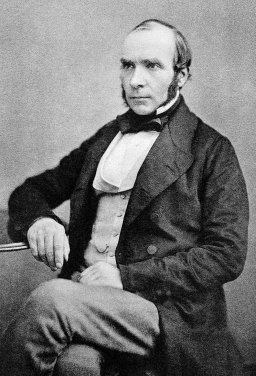
John Snow via Wikimedia Commons
However, his findings were initially controversial. While Snow’s investigation provided compelling evidence for a waterborne transmission route, many in the medical community still adhered to the miasma theory, and his conclusions did not gain widespread acceptance at the time. The Broad Street pump case was influential, but it did not immediately change public health practices or the medical consensus.
Impact
Though Snow's research was not widely accepted immediately, his work laid the foundation for modern epidemiology and public health. Over the years, Snow’s work began to be recognised as pioneering. As germ theory gained acceptance in the later part of the 19th century, Snow’s conclusions about waterborne disease transmission gained more credibility. His cholera maps and his systematic approach to studying disease spread are now seen as key moments in the history of public health.
Snow’s reputation grew after his death in 1858, and by the late 19th and early 20th centuries, his work was regarded as a major contribution to the development of epidemiology and the understanding of infectious diseases. Snow's research was ultimately proven to be accurate, and today he is remembered as one of the founding figures of the field of public health.
Conclusion
While John Snow's cholera research was initially met with skepticism, his meticulous data collection, analysis, and the logical conclusions he drew from his work have earned him a place in the history of public health and epidemiology. It was only after the development of germ theory and further advances in microbiology that the true value of his work was fully appreciated. Today, he is celebrated as a pioneering figure in the fight against infectious diseases.
Read more about the related legislation passed by the UK Government